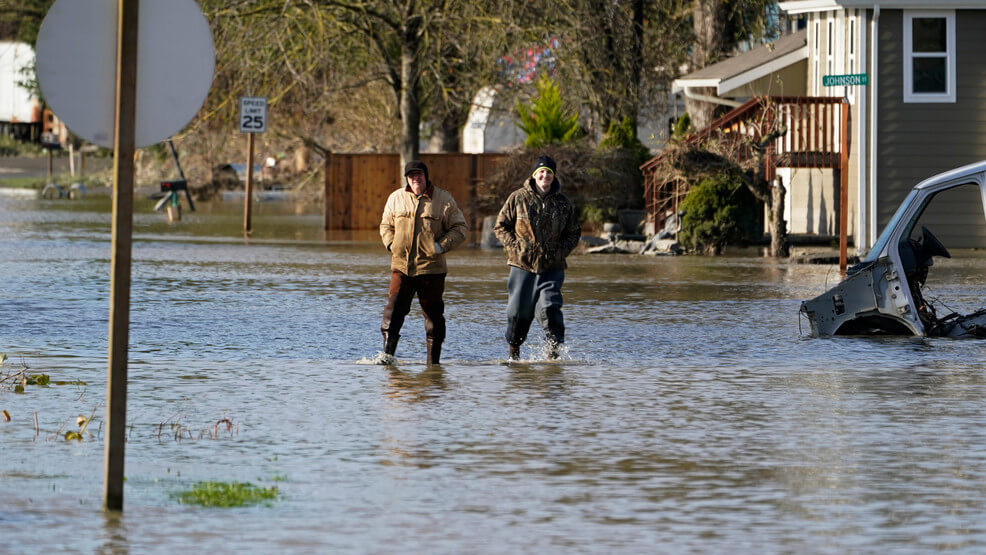
Residents across Washington state and parts of the Pacific Northwest are on high alert after a major levee breach triggered flash flood warnings and widespread emergency responses. The levee failure came after days of relentless heavy rain, part of a larger storm system that has brought flooding risks to multiple communities across the region. Reuters
Local authorities have issued evacuation orders for low-lying neighborhoods and are closely monitoring river levels and infrastructure. Emergency crews are racing against time to fortify threatened sections of the levee and protect homes, roads, and utilities from further devastation.
What Caused the Levee Breach?
Officials say the levee failed along the Green River near Tukwila, south of Seattle, after persistent rainfall pushed water levels far beyond normal limits. The breach was severe enough that a car-sized section of the embankment washed away, prompting authorities to deploy heavy sandbags, earthmoving equipment, and emergency crews to contain the situation. Reuters
King County’s emergency management director told local media that while repair crews were responding quickly, the situation remained volatile and residents should take all warnings seriously.
Flash Flood Warnings and Evacuations
State and county agencies issued multiple flash flood warnings and evacuation notices for hundreds of homes located near rivers and tributaries.
Impacted areas include:
-
King County, WA
-
Sections of Tukwila
-
Low-lying flood zones near the Green River
Emergency shelters were set up for displaced families, while residents in at-risk zones were urged to move to higher ground immediately.
Officials also stressed that even areas not directly flooded could be cut off by washed-out roads or disrupted power lines.
Storm System and Rainfall Patterns
The levee failure underscores the increasing impact of extreme rainfall events linked to atmospheric moisture transport systems known as atmospheric rivers — long, narrow bands of concentrated moisture that can dump intense rainfall when they stall over a region. Wikipedia
Meteorologists say this week’s storm was among the strongest and longest‐lasting atmospheric rivers to hit the Pacific Northwest in recent memory, contributing to swollen rivers, saturated soil, and overflowing banks.
Across western Washington and into neighboring Canada’s British Columbia, authorities have had to coordinate emergency actions as rivers rose dramatically in response to the week-long rain.
Wider Pacific Northwest Flooding and Emergency Response
The flooding risk was not isolated to Washington. The broader Pacific Northwest, including parts of:
-
Oregon
-
British Columbia (Canada)
experienced severe rainfall, leading to emergency declarations, highway closures, and pre-emptive evacuations in vulnerable communities. Wikipedia
Local and state agencies activated disaster response plans, including:
-
National Guard mobilization
-
Sandbagging and debris removal teams
-
Flood monitoring and early-warning systems
Officials stressed that continued rainfall could worsen conditions before any potential improvement.
Climate Change and Extreme Weather Connections
Scientists say that climate change is amplifying extreme precipitation events across North America. Warmer air holds more moisture, increasing the likelihood and intensity of atmospheric rivers and associated flooding. While no single storm can be attributed solely to global warming, climate trends are making such events more frequent and more severe.
The Pacific Northwest’s flooding troubles this winter come after a year of other climate-linked weather extremes around the world, making climate readiness and infrastructure resilience urgent priorities for governments and communities alike.
Economic, Infrastructure, and Environmental Impact
The flooding has already disrupted:
-
Transportation networks (roads and bridges)
-
Power and utility services
-
Agricultural operations
-
Business and school closures
Insurance claims and economic losses are expected to rise as assessments continue.
Environmental impacts such as sediment movement, water quality deterioration, and shoreline erosion are also of concern for local ecosystems and wildlife habitats.
Voices From the Ground
Residents affected by the flooding shared stories of loss, uncertainty, and resilience:
“We woke up to water lapping at our doorstep. It happened so fast,” said one Tukwila resident now staying at an emergency shelter.
Local volunteers have also stepped in to assist neighbors, reinforcing sandbag barriers and delivering supplies to elderly and disabled residents.
What Happens Next?
Officials said the next 72 hours are critical:
-
Continued monitoring of levee stability
-
Possible upgrades or emergency reinforcements
-
Evacuation adjustments should rivers spike further
-
Weather forecasts guiding emergency plans
Experts say the current flooding event could last as rain persists, and communities are urged to remain vigilant.
Conclusion
The levee breach and flash flood warnings in Washington state highlight the growing vulnerability of built infrastructure to extreme weather events. With emergency responses underway and climate change intensifying rainfall patterns, residents and authorities face both immediate risks and longer-term challenges in flood resilience and planning.
As evacuation orders remain active and waters continue rising, the Pacific Northwest braces for what could be one of its most disruptive winter flooding events in recent memory — a stark reminder of how climate and weather extremes intersect with daily life.
FAQs
Q1: What triggered the flooding in Washington state?
A levee breach on the Green River caused by days of heavy rain triggered flash flood warnings and evacuations. Reuters
Q2: Are other regions affected?
Yes, parts of Oregon and British Columbia have also experienced severe rainfall and flood risk. Wikipedia
Q3: Why are such storms increasing?
Climate change increases moisture in the atmosphere, intensifying extreme precipitation events.
Q4: What should residents do now?
Follow evacuation orders, stay informed through local authorities, and prepare for ongoing weather threats.