
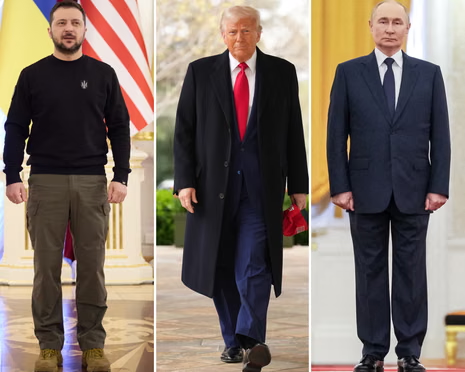
Diplomatic efforts to end the prolonged war in Ukraine intensified on 13 December 2025, as the United States confirmed that a senior U.S. envoy will travel to Berlin for high-level meetings with Ukrainian President Volodymyr Zelenskyy and key European leaders.
The talks, scheduled just ahead of an important European summit, are aimed at exploring ceasefire possibilities, aligning Western positions, and assessing whether conditions exist for renewed negotiations after months of military stalemate and growing war fatigue across Europe.
Why Berlin Is the Chosen Venue
Berlin has emerged as a central diplomatic hub for Ukraine-related negotiations due to:
-
Germany’s key role as Europe’s largest economy
-
Berlin’s influence within NATO and the EU
-
Germany’s position as a major military and humanitarian supporter of Ukraine
-
Ongoing European efforts to balance military support with diplomatic outreach
Hosting the talks in Berlin signals Europe’s desire to play a more active diplomatic role, rather than relying solely on Washington-led initiatives.
What the Talks Will Focus On
According to diplomatic sources, the discussions will center on several critical areas:1️⃣ Ceasefire Conditions
The U.S. and European leaders will assess:
-
Whether limited ceasefire zones are feasible
-
Conditions under which fighting could be paused
-
Mechanisms for monitoring and enforcement
No immediate ceasefire agreement is expected, but groundwork may be laid.
2️⃣ Ukraine’s Position
President Zelenskyy is expected to reiterate:
-
Ukraine’s refusal to cede territory
-
The need for security guarantees
-
Continued Western military and financial support
Ukraine has consistently warned against any ceasefire that would allow Russia to regroup militarily.
3️⃣ European Unity
European leaders aim to:
-
Present a unified diplomatic front
-
Coordinate future aid packages
-
Avoid divisions within the EU over war strategy
Several European countries face growing domestic pressure to pursue peace talks.
4️⃣ U.S. Strategy Going Into 2026
Washington is reassessing:
-
Long-term military assistance
-
Diplomatic options alongside battlefield support
-
Political realities as global conflicts compete for attention
The Berlin meetings may shape U.S. policy in the months ahead.
Why Ceasefire Talks Are Gaining Momentum
After nearly four years of conflict, multiple factors are pushing diplomacy back to the forefront:
-
Military stalemate along several frontlines
-
Economic strain on European economies
-
Energy security concerns during winter months
-
War fatigue among voters in multiple countries
-
Competing global crises stretching diplomatic resources
While neither side appears ready for a full peace settlement, limited ceasefire discussions are increasingly viewed as a necessary step.
Russia’s Position Remains Unclear
Moscow has not publicly commented on the Berlin talks. However, analysts note that:
-
Russia has previously demanded recognition of territorial gains
-
The Kremlin has rejected several Western-backed peace frameworks
-
Moscow may view ceasefire talks as tactical rather than strategic
Any breakthrough would likely require indirect communication channels involving multiple intermediaries.
Concerns From Ukraine and Allies
Despite diplomatic momentum, skepticism remains high.
Ukrainian concerns:
-
A ceasefire could freeze the conflict on unfavorable terms
-
Russia may use a pause to rearm
-
International attention could fade
Western concerns:
-
Prolonged war risks destabilizing Europe
-
Escalation could draw NATO deeper into the conflict
-
Failure of diplomacy could prolong humanitarian suffering
These tensions make negotiations extremely delicate.
Humanitarian Angle Gains Prominence
Beyond military considerations, diplomats are also discussing:
-
Expanded humanitarian corridors
-
Prisoner exchanges
-
Protection of civilian infrastructure
-
Aid delivery during winter
Humanitarian measures are seen as potential confidence-building steps even if broader talks stall.
What Analysts Are Saying
“This is not a peace deal moment, but it is a positioning moment,” said a European security analyst.
“Berlin represents an attempt to align Western expectations and avoid mixed signals,” noted a U.S. foreign policy expert.
Experts caution that diplomacy will likely move slowly, with progress measured in incremental steps, not sweeping agreements.
What Happens After the Berlin Talks?
Possible outcomes:
✔️ Agreement on limited humanitarian or tactical pauses
✔️ Unified Western messaging ahead of the European summit
✔️ No immediate breakthrough, but sustained diplomatic engagement
Less likely but high-impact outcome:
-
Opening of structured negotiations involving third-party mediators
The European summit following the Berlin meetings is expected to reflect the tone and outcomes of these discussions.
Global Implications
Any movement toward a ceasefire could:
-
Ease pressure on global energy markets
-
Reduce food supply disruptions
-
Lower geopolitical risk premiums
-
Shift international focus to post-war reconstruction planning
However, a failed diplomatic push could reinforce a prolonged conflict trajectory into 2026.
Conclusion
The U.S. envoy’s visit to Berlin marks a renewed diplomatic push in the Ukraine war, signaling that Western powers are increasingly exploring ceasefire options alongside continued military support.
While expectations remain cautious, the talks underscore growing recognition that diplomacy — however complex — must remain part of the path forward. As leaders meet in Berlin and beyond, the world will be watching closely to see whether dialogue can finally begin to slow one of Europe’s most devastating conflicts in decades.
FAQs
Q1: Why is the U.S. envoy visiting Berlin?
To discuss possible ceasefire paths with Ukraine and European leaders.
Q2: Is a ceasefire expected soon?
No immediate agreement is expected, but talks may lay groundwork.
Q3: What is Ukraine’s stance?
Ukraine opposes any ceasefire that compromises territorial integrity or security.
Q4: Why is Europe pushing diplomacy now?
Due to war fatigue, economic strain, and long-term security concerns.