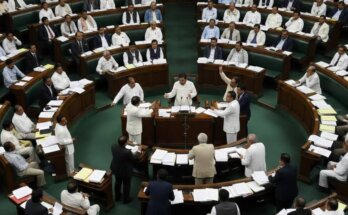
NEW DELHI — In a historic shift for India’s rural economy, President Droupadi Murmu has given her assent to the Viksit Bharat—Guarantee for Rozgar and Ajeevika Mission (Gramin) Bill, 2025. The new Act, known as VB-G RAM G, officially replaces the nearly two-decade-old MGNREGA, marking a total overhaul of the country’s rural employment framework.
The legislation, which was passed by Parliament on December 18, comes into effect immediately. The government has positioned this move as a transition from a simple “work for wages” model to a “livelihood and asset creation” mission aligned with the Viksit Bharat @2047 vision.
What Changes for Rural Households?
The most significant change under the VB-G RAM G Act is the increase in the statutory employment guarantee. While MGNREGA provided 100 days of work, the new law guarantees 125 days of wage employment per financial year for every rural household.
“This is not just a name change; it’s an empowerment mission,” stated Union Minister for Rural Development, Shivraj Singh Chouhan. “We are ensuring more work, higher income security, and the creation of assets that actually help villages grow.”
The “Agricultural Pause” Clause
A unique and somewhat controversial feature of the new Bill is the 60-day mandatory pause. To ensure that farm owners have enough labor during peak sowing and harvesting seasons, the government can now pause public works for up to 60 days a year.
However, the government has clarified that this pause does not reduce the 125-day entitlement. Workers will still get their full quota of work during the remaining 305 days of the year.
Funding and Implementation
Under the new framework, the funding pattern has also been restructured:
-
Centrally Sponsored Scheme: A 60:40 cost-sharing ratio between the Centre and States for most regions.
-
Special Support: A 90:10 ratio for Northeastern and Himalayan states.
-
Weekly Wages: The Act mandates that wages must be paid every week, or at most within 15 days, to prevent the chronic payment delays seen in previous years.
Modernizing with Technology
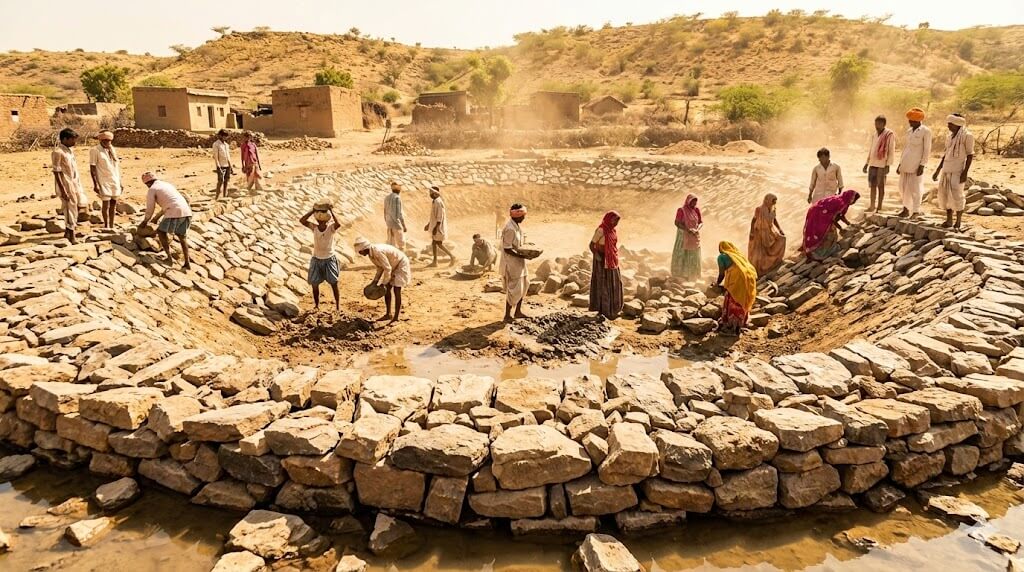
The VB-G RAM G Act introduces a “Viksit Bharat National Rural Infrastructure Stack.” Every asset created—whether a pond, a road, or a community center—will be geo-tagged and integrated into the PM Gati Shakti platform to avoid duplication and ensure quality.
Opposition and Criticism
Despite the government’s enthusiasm, the Bill has faced stiff resistance from the opposition. Critics argue that replacing MGNREGA—a demand-driven right—with a supply-driven “Mission” gives the Centre too much control over disbursements. They also warn that the 60:40 funding split may place an unfair financial burden on poorer states.
Quick Facts: VB-G RAM G Act vs MGNREGA
-
Employment Guarantee: Raised from 100 days to 125 days.
-
Payment Cycle: Weekly or bi-weekly (Strictly enforced).
-
Funding Pattern: 60:40 (Centre-State) for general states.
-
Pause Period: Up to 60 days during peak farming seasons.
-
Focus Areas: Water security, core infrastructure, and climate resilience.
Expert Analysis: Why “Ajeevika” is the Keyword
By the Breaking News Today Indian Desk
The addition of the word “Ajeevika” (Livelihood) in the new Act’s title is significant. While MGNREGA was often criticized for “digging holes to fill them back up,” the VB-G RAM G Act focuses on four priority verticals: water security, rural infrastructure, livelihood assets, and climate resilience.
By linking employment to productive assets, the government is betting that rural workers will eventually need the scheme less as their village infrastructure improves. However, the success of this mission will depend entirely on how effectively the states can manage their 40% funding share without delaying wages.
Note for Workers: To ensure weekly payments under the new VB-G RAM G framework, please ensure your Aadhaar-seeded bank account is active. The new weekly payment cycle relies heavily on the Aadhaar Enabled Payment System (AePS) for instant transfers.