
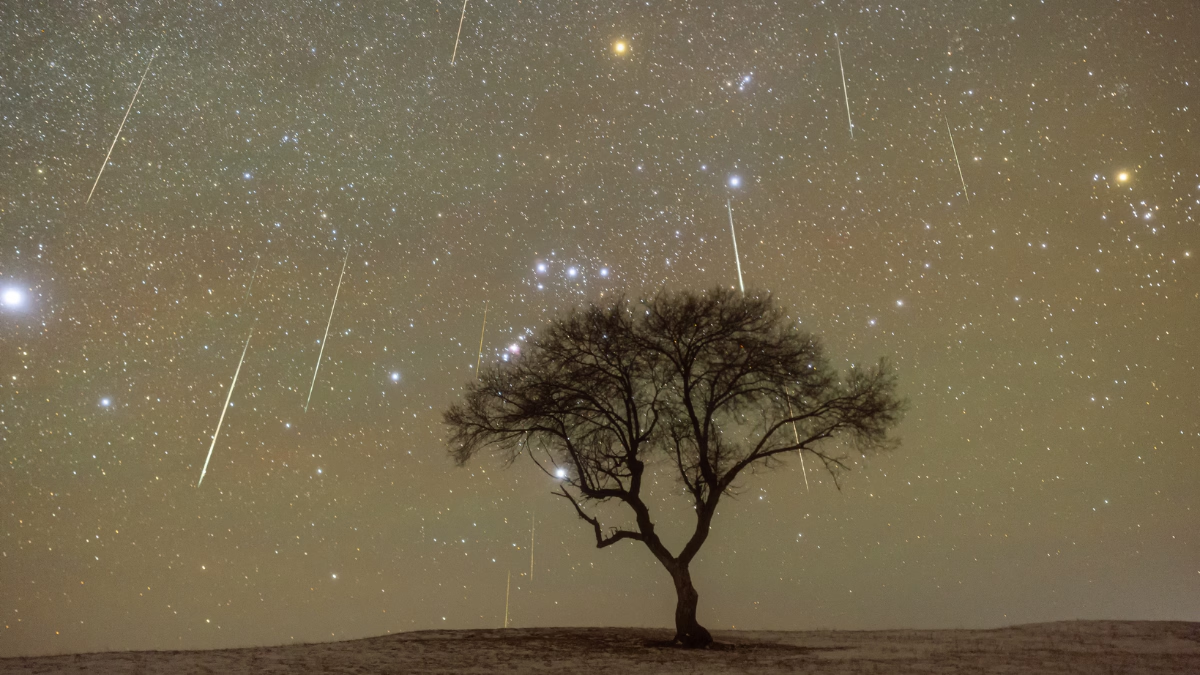
Skywatchers around the world are in for a treat as the Geminids Meteor Shower 2025 reaches its peak on the night of 13 December into the early hours of 14 December. Widely regarded as the most reliable and spectacular meteor shower of the year, the Geminids can produce up to 120 meteors per hour under ideal viewing conditions.
According to astronomers and NASA experts, this year’s display is expected to be particularly impressive, making it a must-watch celestial event for both amateur stargazers and astronomy enthusiasts.
What Is the Geminids Meteor Shower?
The Geminids are one of the strongest annual meteor showers, known for:
-
Bright, slow-moving meteors
-
Long-lasting trails
-
Frequent fireballs
Unlike most meteor showers, which originate from comets, the Geminids come from an asteroid-like object called 3200 Phaethon — a rare and unusual source.
The Unusual Origin: NASA Explains
NASA scientists describe 3200 Phaethon as a “rock comet.”
-
It behaves like an asteroid
-
But releases debris like a comet when it gets close to the Sun
-
Earth passes through this debris every December
As the particles enter Earth’s atmosphere at high speed, they burn up — creating the dazzling streaks of light known as meteors.
When Will the Geminids Peak in 2025?
📅 Peak Dates:
Night of 13 December to early morning of 14 December 2025
⏱️ Best Time to Watch:
-
From midnight to pre-dawn hours
-
When the constellation Gemini is high in the sky
During peak conditions, viewers may spot 1–2 meteors every minute.
Where Can You See the Geminids?
The Geminids are visible from both hemispheres, but viewing conditions vary:
Northern Hemisphere
-
Best visibility
-
Higher meteor counts
-
Longer viewing window
Southern Hemisphere
-
Fewer meteors, but still visible
-
Best seen late at night
Countries including India, the U.S., Europe, Australia, and much of Asia will have good viewing opportunities, weather permitting.
🌙 Moon Conditions in 2025
Good news for skywatchers — moonlight interference will be minimal, allowing darker skies and better visibility of faint meteors.
This significantly improves the chances of seeing:
-
Bright fireballs
-
Long meteor trails
How to Watch the Geminids (No Equipment Needed)
You don’t need a telescope or binoculars.
✅ Best viewing tips:
-
Find a dark location away from city lights
-
Lie flat on your back or use a reclining chair
-
Allow 20–30 minutes for your eyes to adjust
-
Look toward the eastern sky, but scan the entire sky
-
Dress warmly — December nights can be cold
Patience is key — meteors often come in bursts.
Tips for Photography Lovers
Want to capture the meteor shower?
📷 Photography tips:
-
Use a DSLR or mirrorless camera
-
Wide-angle lens (14–24mm preferred)
-
Long exposure (10–20 seconds)
-
High ISO (1600–3200)
-
Tripod is essential
Astrophotographers recommend shooting continuously for the best results.
Why the Geminids Are Special
The Geminids stand out because:
-
They are denser and brighter than most meteor showers
-
Meteors move slower, making them easier to spot
-
They often produce colorful fireballs
Astronomers consider the Geminids more consistent than the Perseids or Leonids.
Scientific Importance
Beyond beauty, the Geminids help scientists:
-
Study near-Earth objects
-
Understand asteroid behavior
-
Analyze atmospheric entry dynamics
Research on Phaethon also aids planetary defense studies.
What If You Miss the Peak Night?
Even if clouds or weather interfere:
-
Strong activity continues on 14 December night
-
Some meteors may be visible for several nights before and after peak
So keep looking up!
Conclusion
The Geminids Meteor Shower 2025 offers one of the best stargazing opportunities of the year, peaking on 13 December with clear skies, minimal moonlight, and high meteor counts. Whether you’re an astronomy enthusiast or a casual skywatcher, this is a rare chance to witness nature’s most dazzling light show.
All you need is a dark sky, patience, and curiosity — the universe will do the rest.
FAQs
Q1: How many meteors can I see during the Geminids?
Up to 120 meteors per hour under ideal conditions.
Q2: Do I need special equipment?
No — the naked eye is best.
Q3: What causes the Geminids?
Debris from asteroid 3200 Phaethon entering Earth’s atmosphere.
Q4: Is the Geminids visible in India?
Yes, it is clearly visible across India and most of Asia.