
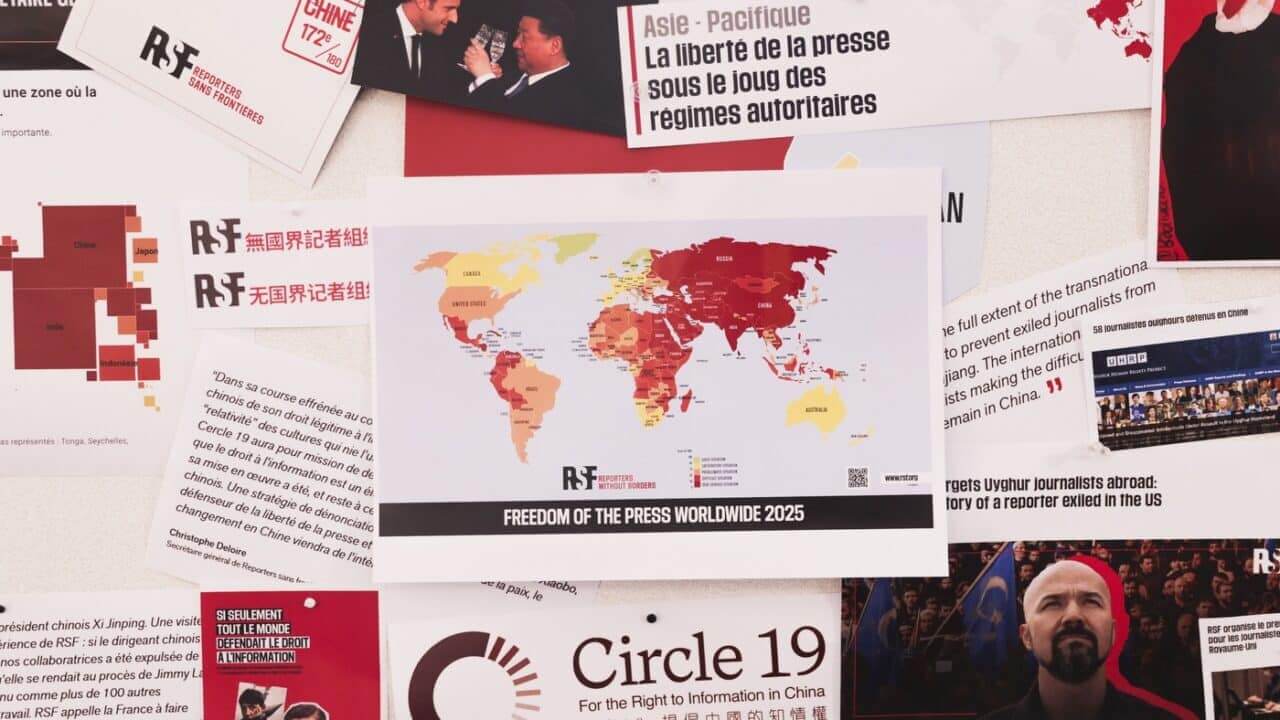
A shocking new report released by Reporters Without Borders (RSF) has revealed that the Israel–Gaza conflict was the deadliest environment for journalists in 2025, with nearly half of all media-related deaths worldwide occurring in the region.
The findings highlight the unprecedented dangers faced by journalists covering the ongoing conflict, raising urgent concerns about press freedom, humanitarian protections, and the safety of frontline media workers.
Key Findings From the RSF Report
According to RSF’s 2025 annual assessment:
🔴 Nearly half of global journalist deaths occurred in Gaza and surrounding territories.
This marks the second consecutive year that the region leads the world in media fatalities.
🔴 Most deaths were caused by targeted strikes, crossfire, or collapsed buildings
Journalists covering military operations were exposed to continuous risk.
🔴 Local Palestinian reporters were disproportionately affected
Many lacked protective gear, safety training, or evacuation access.
Conditions for Journalists in Gaza: ‘Unprecedented Danger’
RSF notes that Gaza remains one of the most dangerous conflict zones on the planet for media coverage.
Factors contributing to extreme risk:
-
Heavy urban bombardment
-
Lack of safe corridors
-
Breakdown of communication networks
-
Shortage of medical and protective equipment
-
Inability to evacuate or relocate
Many local journalists continue reporting despite losing family members, homes, or equipment.
Accusations Against Israeli Forces
The RSF report claims that Israeli military operations were responsible for a significant portion of the journalist deaths.
Key points include:
-
Allegations of targeted strikes on buildings housing media workers
-
Journalists killed while wearing press vests
-
Cases where media vehicles were hit despite being marked
Israeli officials have denied intentional targeting, insisting that casualties occurred during active combat in dense urban zones.
Global Impact: Journalism Under Threat
The RSF report warns that the Gaza conflict reflects a growing global pattern where:
-
Conflict reporting becomes more dangerous
-
Journalists face deliberate obstruction
-
Truth-telling becomes increasingly difficult
Outside Gaza, RSF recorded deaths in:
-
Ukraine
-
Sudan
-
Myanmar
-
Haiti
-
Yemen
However, none came close to the scale seen in the Israel–Gaza region.
Stories of Fallen Journalists
The report includes heartbreaking accounts of reporters who risked — and lost — their lives to show the world the realities of war.
Examples include journalists who:
-
Continued broadcasting during bombardments
-
Reported live from collapsing buildings
-
Documented humanitarian conditions despite massive personal risk
-
Used drones and mobile phones when media equipment was destroyed
The bravery of these journalists has been widely recognized by international media organizations.
Press Freedom Groups React Strongly
International organizations expressed alarm:
“The scale of journalist deaths in Gaza is unlike anything we’ve tracked in decades,” said an RSF spokesperson.
“Journalists are civilians under international law. Their protection is non-negotiable,” said the Committee to Protect Journalists (CPJ).
Human rights groups are urging the UN to launch an independent investigation.
Calls for Accountability & International Action
RSF and other watchdogs are demanding:
-
Independent war-crimes investigations
-
Protection corridors for journalists
-
Better access to medical support
-
Stronger enforcement of press safety laws
-
International monitoring of conflict zones
Multiple governments have expressed concern but concrete action remains limited.
The Human Toll of Conflict Reporting
Behind every statistic is a personal tragedy:
-
Journalists separated from families
-
Reporters working without protective vests
-
Freelancers risking their lives for minimal pay
-
Media teams losing entire crews in a single strike
The report highlights that local journalists suffer the highest casualties because they cannot leave their communities.
What This Means for 2026
Experts warn that press freedom may continue to deteriorate without structural change.
Potential developments:
-
Increased restrictions on conflict reporting
-
Greater digital censorship
-
New safety protocols for war correspondents
-
Rising demand for international press protections
Journalists worldwide fear that Gaza represents a dangerous new precedent.
Conclusion
The RSF 2025 report paints a devastating picture: the Israel–Gaza conflict has become the deadliest battlefield for journalists, accounting for nearly half of all media deaths worldwide.
As the world debates geopolitical narratives, these findings underscore the urgent need to protect the individuals risking their lives to report the truth. Without stronger safeguards, journalism — the backbone of democratic accountability — will continue to face unprecedented threats.
FAQs
Q1: Which region was deadliest for journalists in 2025?
The Israel–Gaza conflict zone, according to RSF.
Q2: Why were so many journalists killed?
Due to heavy bombardment, unsafe conditions, and allegations of targeted attacks.
Q3: Are investigations underway?
Press groups are calling for independent investigations into journalist deaths.
Q4: Who suffered the most?
Local Palestinian journalists, who lacked resources and means of escape.